New UofM institute brings academic research directly to Memphis organizations
By Liz Preuss
Feb. 27, 2026
A new institute at the University of Memphis that launched on Feb. 19 is connecting local organizations with scientific data and turning research into real-world solutions for Memphis communities.
The Memphis Applied Research and Community Action Institute connects community groups with student researchers who help analyze data, map neighborhood trends and translate complex research into practical information organizations can use.
"The concept of the institute is to bring research to the community," said Katherine Lampert-Pennington, the director of the School of Urban Affairs and Public Policy. "We work with community organizations, public administrations and other groups who have research questions that need the kind of resources … that faculty and students at the university have."
In general, academic research rarely begins with community requests. Scholars usually come up with a topic of their own, which often stays within the university. Now, student researchers have the chance to work directly for communities.
Current projects include analyzing social mobility among high school students mentored through a sports program and mapping Memphis properties with high eviction rates or repeated code enforcement violations.

The institute was initiated through the faculty's Community Advisory Board, who approached Lambert-Pennington with the idea. Together with the organization 'Innovate Memphis', the faculty planned the institute for about a year and a half.
To provide a variety of skill sets, three researchers are collaborating with 10 other faculties from eight departments on campus. Their expertise spans from English to Social Work. Representatives of the different faculties oversee the projects and provide guidance for the student researchers.
Ask MARCA for small projects
Emily Thomson, a doctoral student in critical urban research, coordinates the requests submitted through the program. When organizations submit a proposal, she schedules meetings to understand their needs.
"It's a very collaborative process. We are listening to the community organization … where they're at and what would help their work the most," Thomson said. "And then we just try to piece together where our research skills fit …"
"Ask MARCA is the core initiative of the MARCA institute and it is a way for community partners to make requests directly to us for research support," Lambert-Pennington said. Ask MARCA is available for small projects of 60 hours or less that are usually completed within three to four weeks.
For smaller organizations, Ask MARCA is an opportunity to access data they often don't have resources for, Lambert-Pennington said. The institute's main goal is to build long lasting community partnerships.
"Many small organizations don't have research staff," Lambert-Pennington said. "We like to think of it as our pipeline of trust that we're building with these organizations in order to, in the future, write larger grants with them and do it to continue to do work with them."

Training scholars on community issues
The institute research team consists of Thomson and two master's students: City and Regional Planning scholar Progga Paramita Ghosh and Applied Anthropology scholar Olatomiwa Isaac Olusesi.
Thomson said she appreciated working on real requests.
"It's such a mutually beneficial relationship between students and the community partners … Students have this opportunity to work on real projects … that impact Memphians and we are able to pour in … our passion for all of our research interests," Thomson said.
Although the institute was officially launched in February, the institute had started out with a soft launch in June 2025. Is first research was an historical archival inventory for the Klondike Smokey City CDC museum.
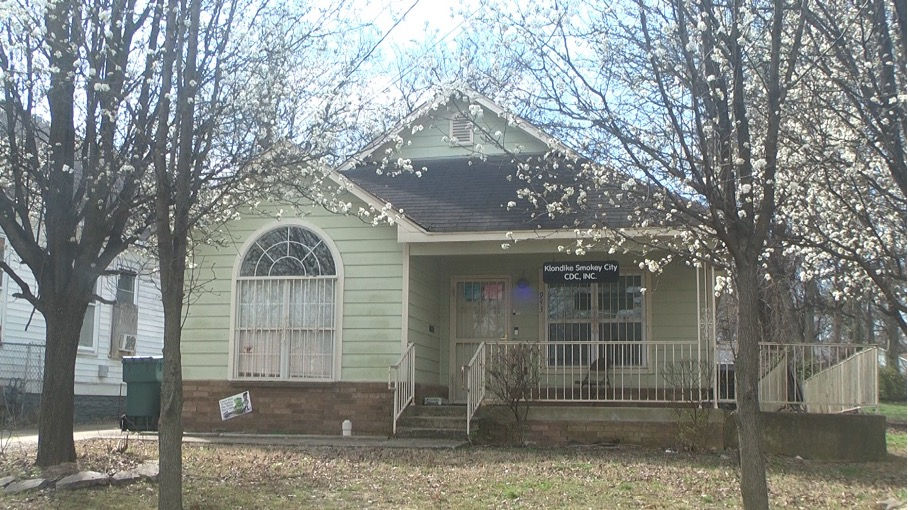
Since then, 34 requests have been submitted through Ask MARCA. Six of those requests are completed and they're currently working on another six. Some of the submissions didn't match with the possibilities of the team but were redirected to other resources.
The requests are diverse. Other than the mapping, some organizations asked to have official data sets analyzed or wanted their reports broken down into material that is easily accessible to everyone. There were many survey development requests as well.
Current projects
Now, the student group focuses on three of their six upcoming projects. One is analyzing data on social upward mobility of high school students who were mentored through a sports program.
For another project, the team is mapping properties in Memphis which have high eviction or high code enforcement. The third research examines workforce development data among women, concerning the types of jobs they pursue.

The project on high evictions will be used for housing advocacy in the city of Memphis and help the organization to enhance their volunteer work.
So far, the feedback is great, Thomson said looking back at the launching event.
"It was really heartwarming to see how many of our community partners that we've engaged with all showed up," Thomson said. "A lot of our community partners that we have worked with so far have already given us feedback about how they've been able to use the projects."
Future goals
For the future, Lambert-Pennington is hoping to gather more funding through grants, donations and contracts for recurring projects. She is aiming for the institute to be a sustainable resource for Memphians.
"We're trying to build an endowment to support the institute … which will allow us to have some operating budget, whether we have contracts and grants or not, because we're committed to being a resource to the community," Lambert-Pennington said.
Thomson would like to see their student researchers team grow: "We hope to bring on some additional undergraduate students, some additional graduate research fellows … We would ideally like to scale up and work on larger projects".

To enhance the institute, student researcher Emily Thomson would like to see the team grow at the University of Memphis. February 12., 2026. Photo/Liz Preuss
Long-term, Lambert-Pennington wants to expand the institute's work outside of Memphis and help communities develop their own capacities.
"I would love to see us expand beyond the Memphis statistical area and do some … things that are more rural," Lambert-Pennington said. "I'd like for us to be able to offer training in research to communities and advocacy work to communities, like, sort of help them think through how to make change."
Liz Preuss - lizpreuss.media@gmail.com

Comments